The best laser measure for Australian homes, and when a tape still wins
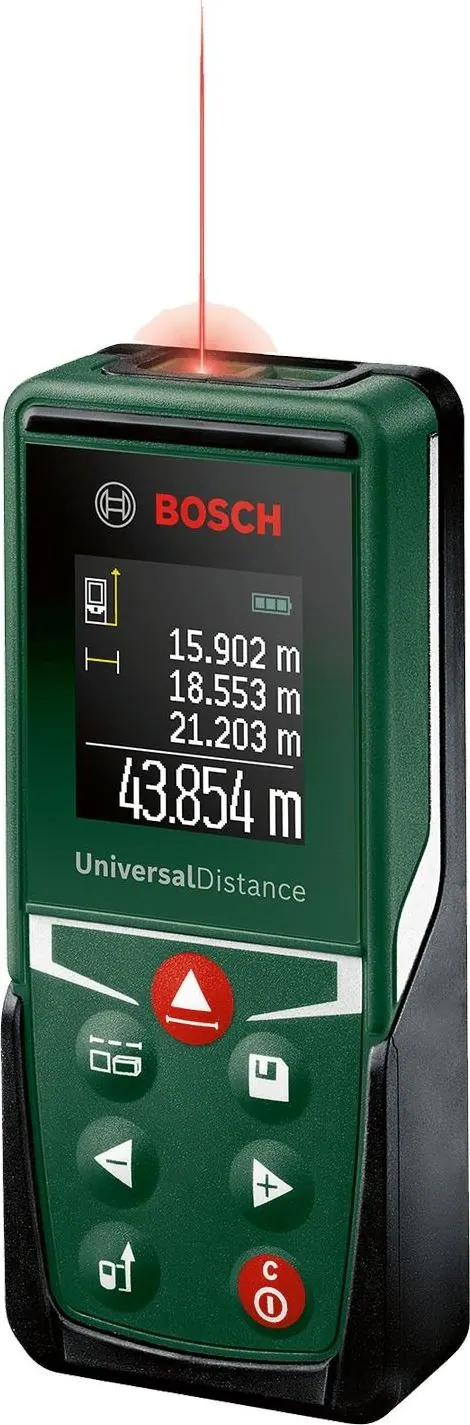
The best laser measure for most Australian homes is a mid-range model that reaches 30 to 50 metres and works out area and volume, such as the Bosch UniversalDistance 50. That covers every room in a house, and the sums for flooring and paint, without paying for app features you may never open. A good tape measure still belongs in the drawer beside it for short cuts and fiddly gaps.
This guide compares Bosch's home laser measures using the specs Bosch Australia publishes, explains how accurate they really are, and covers when a tape is the better tool.
Quick comparison
| Model | Range (Bosch) | Accuracy (Bosch) | Suits |
|---|---|---|---|
| Bosch EasyDistance 20 | 0.14–20 m | ±3.0 mm | Simple lengths around the house |
| Bosch UniversalDistance 50 | 0.05–50 m | ±2.0 mm | Rooms, flooring and paint maths |
| Bosch AdvancedDistance 50C | 0.05–50 m | ±2.0 mm | Renovators who want the app and indirect measuring |
Bosch adds "plus a use-dependent deviation" to each accuracy figure. Leica, Milwaukee, DeWalt and others make laser measures too; the points below apply whichever brand you choose.
Bosch EasyDistance 20: the simple one
The Bosch EasyDistance 20 is the one-button option. Bosch describes it as measuring lengths, widths and gaps up to 20 metres, with the last three readings on screen, and it runs on two AAA batteries. Bosch doesn't list area or volume functions for it.
Who it suits. Renters and anyone who mainly wants quick lengths: will the couch fit, how wide is that alcove. Twenty metres is more than most rooms need.
Who should skip it. If you're planning flooring or paint, you'll want a model that does the area sums for you.
Bosch UniversalDistance 50: the sweet spot
The Bosch UniversalDistance 50 reads from 5 cm to 50 m, with Bosch quoting ±2.0 mm. It has a colour display, calculates area and volume, adds and subtracts readings, and has a continuous mode with min and max, which helps find the true square distance across a room. It stores ten values and runs on two AAA batteries.
Who it suits. Home owners measuring rooms for carpet, timber floors, blinds or paint on their own, without a second person holding the end of a tape.
Who should skip it. If you only ever measure shelves and furniture, the EasyDistance 20 or a good tape will do.
Bosch AdvancedDistance 50C: for renovators
The Bosch AdvancedDistance 50C has the same 50 m range and ±2.0 mm figure, and adds a colour touchscreen (the UniversalDistance 50's colour display isn't touch), incline angles, and indirect measurement when furniture blocks the line. Bosch says it can send readings to the Bosch app for planning and documentation. It runs on three AAA batteries.
Who it suits. Renovators drawing up plans, and anyone who wants measurements saved to a phone rather than scribbled on the plasterboard.
Who should skip it. If you won't use the app, you're paying for features the UniversalDistance 50 doesn't need.
Laser measure vs tape measure
A laser wins for anything across a room: wall to wall, floor to ceiling, the length of a hallway. It's a one-person job and it does the maths. A tape wins for short measurements, cutting timber, checking a gap, measuring around a curve, and marking a spot as you measure it. A laser needs a surface to bounce off, so it can't measure the width of an open doorway in mid-air or the length of a board on the bench as easily as a tape.
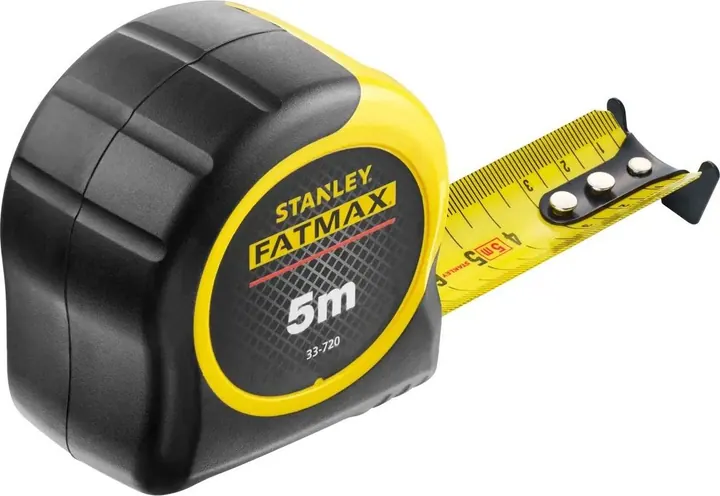
That's why most kits have both. A Stanley FatMax 5 m tape is a solid partner for any of the lasers above.
How accurate are laser measures?
For home use, more than accurate enough. A figure of ±2 mm over a room-length measurement is well within what flooring, blinds or furniture layouts need. A few things affect a reading in practice:
- The target surface. Glass, mirrors, shiny tiles and very dark surfaces can give odd readings. Aim at a flat, matt wall where you can.
- The reference edge. Most measures can read from the front or rear edge. Check which one is set before you take a reading against a wall.
- Holding it square. A laser angled across a room reads long. Continuous mode with a minimum reading helps find the shortest, square distance.
Do laser measures work outside?
They work, but bright Australian sun can make the red dot hard to see, especially at longer distances. Measure early or late in the day, aim at a light, matt surface, or hold something flat at the far end as a target. For a whole block or a long fence line, a long open-reel tape is often simpler.
Laser measure or laser level?
They're different tools. A laser measure reads distances. A laser level projects a level or plumb line onto a wall for hanging pictures, cabinets or tiles. If you need straight lines rather than lengths, you want a level.
Laser safety
Home laser measures like these are Class 2 lasers. Don't look into the beam, never point it at people's or pets' eyes, keep it away from children, and don't aim it at passing cars or across a street.
Bottom line
For most homes, the Bosch UniversalDistance 50 is the sensible middle: 50 m, area and volume, and AAA batteries. Choose the EasyDistance 20 for simple lengths, or the AdvancedDistance 50C if you'll use the app and indirect measuring. Keep a good tape either way. For the rest of a starter kit, see our guide to the tools every home should have, and if you're fitting out a workshop, our shed setup guide.
FAQ
Is a laser measure accurate enough for DIY?
Yes, for rooms, walls and floor areas. Bosch quotes ±2.0 mm for the UniversalDistance 50 and AdvancedDistance 50C, and ±3.0 mm for the EasyDistance 20, each plus a use-dependent deviation. Use a tape for cutting and small gaps.
Is a laser measure worth it?
If you measure rooms for flooring, paint, curtains or furniture, yes: it's faster, needs no helper, and does the area sums. If you mostly measure shelves and timber, a good tape is enough.
What range do I need?
Twenty to thirty metres covers almost any room in a house. Fifty metres helps in big sheds, warehouses and outdoors, where readings get harder anyway.
Can a laser measure replace a tape measure?
Not completely. It's better across rooms, but a tape is still easier for short cuts, curves and marking as you measure.