Garage organisation ideas for Australian homes, from a small garage to a full shed
The best garage organisation ideas start with less stuff and clear zones, not a shopping trolley of storage. Clear out what you don't use, give every kind of item a zone, then get things off the floor and onto the walls. That order works whether you've got a single garage under a townhouse or a double garage and a Colorbond shed out the back.
This guide walks through it step by step, with Australian conditions in mind: heat, dust, storms and older wall sheeting. For choosing between rolling boxes, wall storage and tool chests in more detail, see our garage tool storage guide.
1. Clear it out first
Pull everything out onto the driveway on a dry weekend and sort it into keep, donate, sell and tip. Be honest about the box that hasn't been opened since the last move. Old paint, chemicals and batteries shouldn't go in the wheelie bin: check your council's household chemical and battery drop-off days.
Only buy storage once you can see what's left. It's the most common mistake: buying shelving for stuff that should have gone.
2. Zone the space
Group things by how often you use them and where you use them:
- Daily, near the door: shoes, shopping bags, the bin, the car charger.
- Weekly, at standing height: tools, garden gear, cleaning gear, sports equipment.
- Seasonal, up high: Christmas decorations, camping gear, the beach umbrella.
- Dangerous, locked or out of reach: pool chemicals, fuel, poisons and sharp tools.
Keep the path from the car to the house door clear, and leave room to open car doors fully. In a small garage, the car bay is the hardest constraint, so plan everything around it.
3. Use the walls
Walls are the biggest wasted space in most Australian garages. Three options suit most people:
- Shelving. A freestanding garage shelving unit holds tubs and boxes. Anchor tall shelving to the wall so it can't tip, put heavy items on the bottom shelves, and stay within the load rating on the listing.
- Pegboard or slatwall. A pegboard tool organiser kit above the bench puts hand tools where you can see them. Outline each tool and you'll notice straight away when something hasn't come back.
- Hooks and rails. For ladders, hoses, extension leads, bikes and long-handled garden tools.
Before you drill. Brick and besser block need masonry anchors; stud walls need you to find the studs; Colorbond sheds often have thin steel girts that limit what you can hang. If your garage was built before about 1990, wall or ceiling sheeting may contain asbestos. Don't drill, cut or sand it until it's been checked.
4. Look up
Overhead racks above the bonnet are good for seasonal tubs. Fix them into ceiling joists, stay well within the rated load, keep them clear of the roller door's track and motor, and use a proper step ladder, not a chair, to reach them. If you're not sure what your ceiling can hold, ask a builder or handyman before loading it up.
5. Sort the small stuff
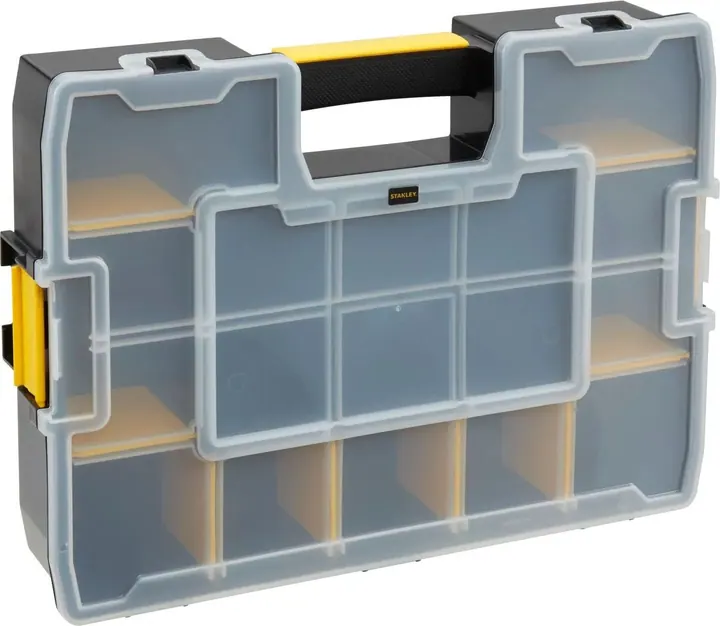
Loose screws, wall plugs and drill bits cause more mess than anything else. A Stanley Sort Master organiser has a clear lid and removable dividers, so you can see what's inside and set the compartments to suit. Stanley rates it to 7 kg, and the lid interlocks with the dividers to help stop parts mixing. Label each compartment and store organisers flat.
6. Make a work zone
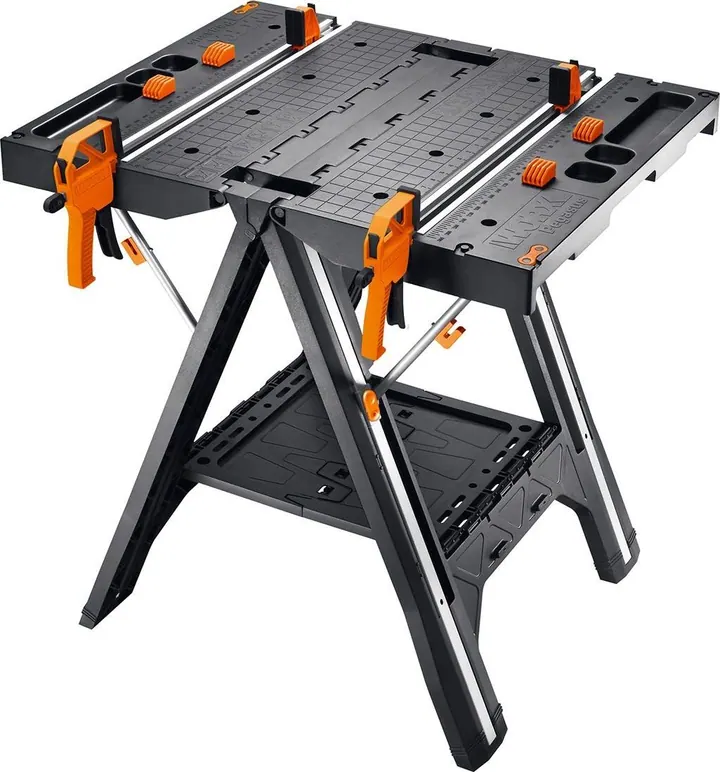
Even a small garage benefits from one clear surface. If a fixed bench would steal the car bay, a WORX Pegasus work table folds flat to hang on the wall and flips into sawhorses when you need it. Our shed setup guide covers benches, lighting and ladders in more detail.
7. Light it properly
A single globe in the middle of the ceiling leaves shadows exactly where you're working. Portable WORKPRO rechargeable LED work lights have magnets and fold-out stands, so you can stick one to a steel shelf or stand it on the bench without running an extension lead.
8. Store batteries, fuel and chemicals safely
Australian garages get hot, and that matters for what you store in them.
- Lithium tool batteries. Store them out of direct sun and away from the hottest wall, and let a hot battery cool before charging. Charge on a hard, non-flammable surface, and stop using any pack that's swollen or damaged.
- Fuel. Keep petrol only in approved fuel containers, in small amounts, away from anything that sparks or flames, including hot water systems and the car.
- Chemicals. Keep them in their original containers, up high or locked away from children, and away from heat.
Small garage tips
- Go vertical before you go wide.
- Choose stackable tubs with clear sides or labels on the ends.
- Use the back of the door to the house for brooms and mops.
- Keep a box by the door for things leaving the garage: returns, donations, items to lend.
Bottom line
Declutter, zone, then store: walls for what you use weekly, the ceiling for what you use yearly, and organisers for the small stuff. Start with shelving, a pegboard and a parts organiser, and add a fold-away bench and good light when you're ready.
FAQ
How do I organise a small garage?
Declutter first, keep the car bay clear, and go vertical with wall shelving, pegboard and hooks. Use overhead racks for seasonal items, and choose fold-away furniture like a folding work table.
What's the best way to organise screws and nails?
A clear-lid organiser with adjustable dividers, labelled by size and type. Store it flat so parts don't mix.
Is it safe to store power tool batteries in a hot garage?
Heat shortens battery life. Keep packs out of direct sun and off hot walls, let them cool before charging, and stop using any battery that's swollen or damaged.
How much weight can garage shelving hold?
It depends on the unit and how it's fixed. Check the load rating on the listing, put heavy items low, and anchor tall shelving to the wall.